Landscaping
Patios & Paving in Pontefract & West Yorkshire
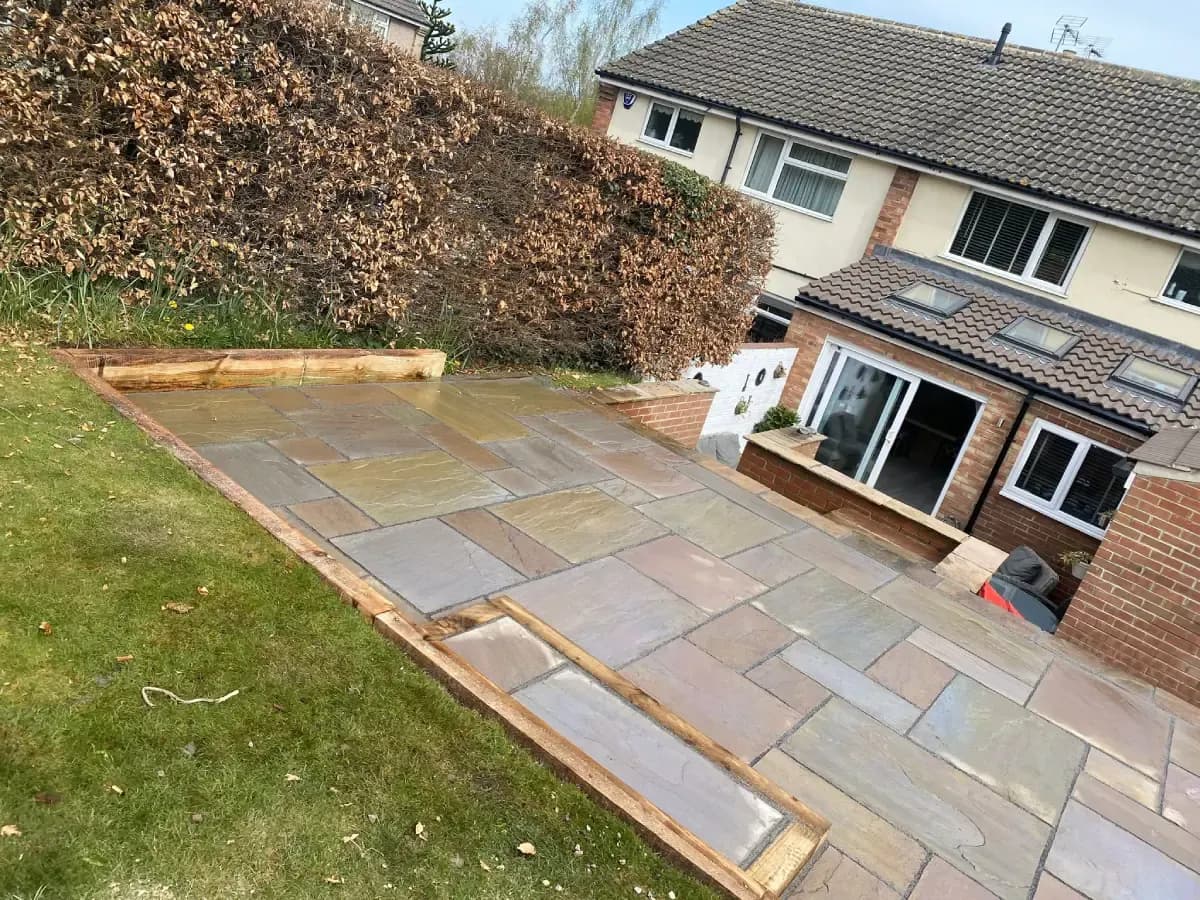
Indian sandstone and porcelain patios laid on a proper sub-base, with steps and sleeper edging where needed.
Paving & Patios
Paving & Patios by a City & Guilds approved team
A well-laid patio gives you a usable outdoor room for dining, relaxing and entertaining. We lay Indian sandstone and porcelain patios on a properly prepared sub-base with the right falls, so they stay level and drain well for years.
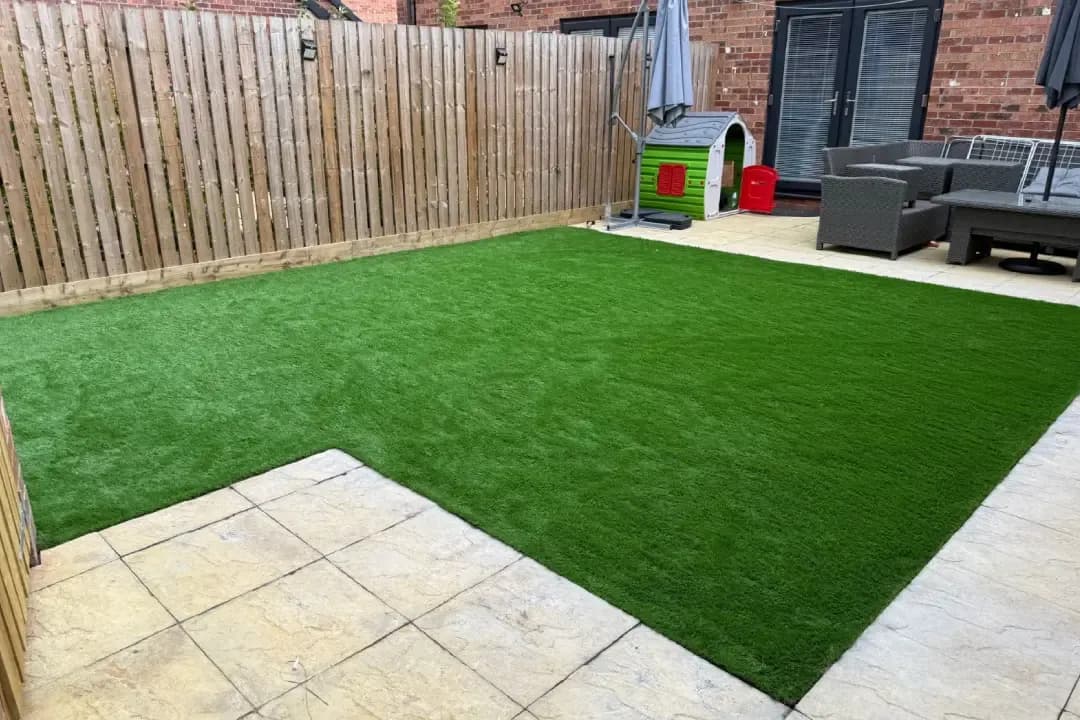
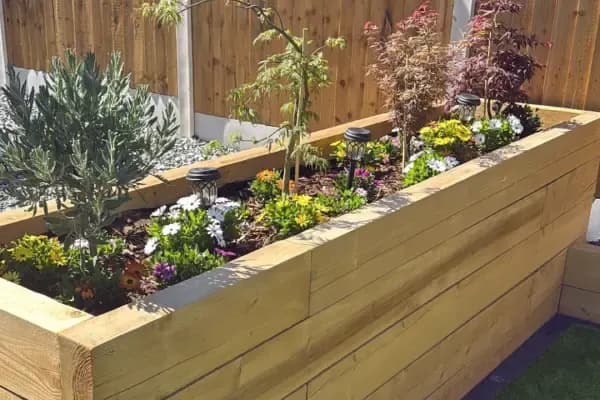
From a simple seating area to multi-level patios with steps and sleeper edging, we design and build patios across Pontefract and West Yorkshire, often alongside new lawns, fencing and raised beds as part of a full garden transformation.
Built to stay level
A solid sub-base and full mortar bed stop slabs rocking or sinking.
Drains properly
Patios are laid with gentle falls away from the house so water runs off.
Choice of materials
Natural Indian sandstone for warmth or porcelain for a clean, modern look.
Part of the bigger picture
We can add steps, walls, edging and lawns so it all fits together.
Is a paved patio the best option for your garden?
Paving is hard to beat if a level site sits close to the back door and you want furniture that stays stable all year. Heavy barbecues, pizza ovens and big dining sets sit safely on stone, and hard surfaces shrug off the wear that softer finishes show. Different conditions favour other answers. A plot falling sharply away from the house may suit raised timber better, because building up a solid slab requires retaining structures and a lot of fill. Permanently shaded corners stay damp, so sandstone there will turn green quicker than a dense tile. Heights around the building matter as well: paving should finish well below the damp-proof course, with airbricks left clear, and that sometimes rules out a level threshold. Where a seating zone is only used occasionally, gravel with stepping stones might be enough.
Priming and bedding: stopping slabs coming loose
Porcelain absorbs almost no water, so ordinary mortar has nothing to grip and tiles can lift cleanly away after one winter. Brushing a slurry primer across the underside creates the bond, and it must still be wet when the slab goes down, otherwise it acts as a release layer instead. Sandstone is more forgiving, though priming helps there too, and it reduces dark patches caused by moisture rising through the stone. Bedding is the other common failure. Five blobs of mortar, known as spot bedding, leave hollows where frost and water collect, and these corners crack or rock under a table leg. A continuous wet bed supports every part of the paver. Jointing needs equal care, since a cement-based product can stain pale stone unless the surface is protected first with a removable coating.
How it works, step by step
- Step 1
Design visit
We talk through how you want to use the space and help you choose materials.
- Step 2
Groundwork
The area is excavated and a compacted sub-base is laid to the right levels.
- Step 3
Laying
Slabs are laid on a full mortar bed and cut neatly to fit.
- Step 4
Pointing & clean
Joints are pointed and the patio is cleaned ready to enjoy.
FAQs
Paving & Patios: your questions answered
Can't see your question? Call Sean on 07860 510073 or read our general FAQs.
Is porcelain or sandstone better for a patio?
Sandstone has a natural, varied look and is great value. Porcelain is very hard-wearing, stain resistant and easy to clean. We bring samples so you can compare.
Can you level a sloping garden for a patio?
Yes. Re-levelling is a big part of what we do, using steps, sleeper walls or retaining walls to create flat, usable areas.
How long does a patio take to lay?
Most patios take a few days, depending on size, levels and the weather. We will give you a clear timeline when we quote.