Landscaping
Sleeper Walls & Raised Beds in Pontefract & West Yorkshire
Add levels and structure to your garden with timber sleeper retaining walls and planters.
Sleeper Walls & Raised Beds
Sleeper Walls & Raised Beds by a City & Guilds approved team
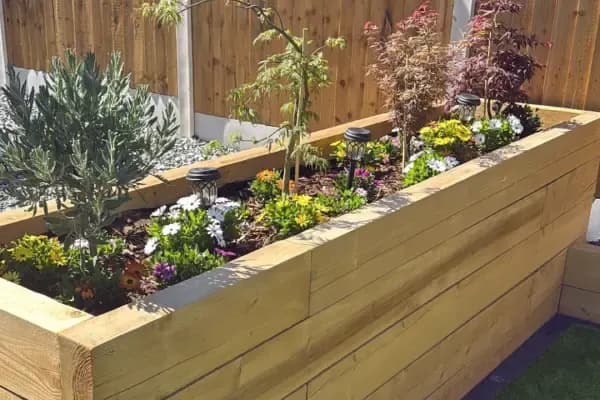
Timber sleepers are a versatile way to add structure to a garden. Stacked and fixed securely, they make sturdy retaining walls for sloping gardens, raised flower and vegetable beds, steps and planters.
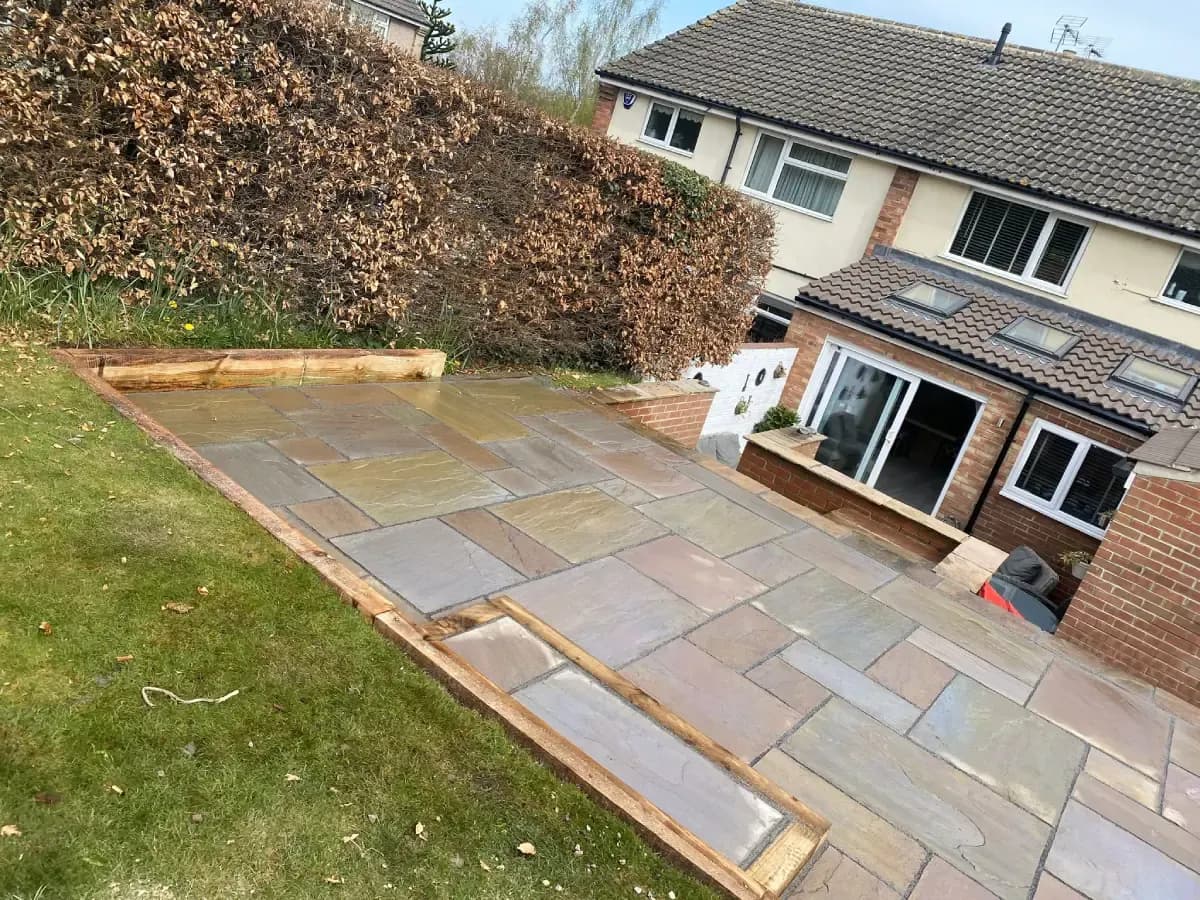
We build sleeper walls and raised beds across Pontefract and West Yorkshire, often as part of re-levelling a garden for a new patio or lawn.
Tames sloping gardens
Retaining walls create flat, usable areas on different levels.
Easier gardening
Raised beds mean less bending and better soil for planting.
Natural look
Timber softens a garden and pairs well with patios and lawns.
Securely built
Sleepers are fixed and anchored so walls stay solid.
When sleepers are the sensible option, and when to build in masonry
Timber retaining makes sense for modest level changes, informal gardens and beds that need to go in quickly with little disruption. Softwood is the affordable starting point, while oak gives a heavier, longer-lasting result with attractive weathering. Limits do apply. Anything holding back a high bank, carrying a driveway or standing near a neighbouring building needs proper engineering, and reinforced masonry may be safer. Timber in constant contact with wet soil also has a finite life, unlike block or brick, so plan for eventual replacement. Reclaimed railway stock looks characterful but can weep tar on warm days, making it a poor option near children and for growing food. New untreated hardwood, or softwood treated for ground contact, is usually better for vegetables, with a liner keeping the soil off the wood.
Sleeper fixing and drainage: what keeps a wall upright
Soil pushes hardest after rain, and a sleeper wall that looks fine on day one may start leaning once saturated ground presses behind it. Vertical posts concreted into firm ground provide the real resistance, with roughly as much post buried as stands above it for a retaining job. Courses should be staggered like brickwork, so no straight joint runs from top to bottom. Long structural screws rated for landscaping hold far better than nails, which rust and work loose as timber swells and shrinks. Mechanical fixings driven through each layer tie the pieces into one mass. Water relief matters equally: a geotextile lining and clean stone backfill let moisture drain away rather than build pressure. Sealing all cut ends with preservative protects the exposed grain, which is otherwise where decay typically starts.
How it works, step by step
- Step 1
Plan
We look at levels and how you want to use each area of the garden.
- Step 2
Prepare
Ground is dug out and levelled for a solid footing.
- Step 3
Build
Sleepers are cut, stacked and fixed securely.
- Step 4
Fill & finish
Beds are filled with soil and the area is tidied, ready for planting.
FAQs
Sleeper Walls & Raised Beds: your questions answered
Can't see your question? Call Sean on 07860 510073 or read our general FAQs.
How high can a sleeper retaining wall be?
Lower walls are straightforward. Taller walls need extra fixing and anchoring, and we will advise on what is safe for your garden.
Do you fill raised beds with soil?
Yes. We can fill new beds with good quality topsoil so they are ready to plant.
Can sleepers be used for steps?
Yes. Sleeper steps are a practical, natural-looking way to link different levels.