What affects dropped kerb cost
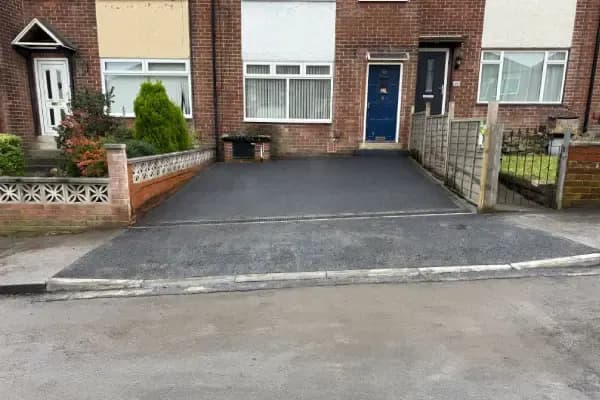
A dropped kerb, or vehicle crossover, is more than lowering a few kerbstones. The pavement between the road and your boundary has to be strengthened to take the weight of a car, so the price depends on how wide and deep the crossing is. A pavement of concrete flags takes different work to one in tarmac. Inspection covers, utility boxes and street lighting can add time if they need adjusting, and a grass verge means extra digging and construction. Your council fees are a separate part of the total, and the amount differs from one authority to another.
- Width of the crossing and number of kerbs lowered
- Depth of pavement between the road and your boundary
- Flags, tarmac or a grass verge to rebuild
- Covers or street furniture that need adjusting
- Council application and inspection fees
Why you need highway authority approval
The kerb and pavement are public highway, so a dropped kerb can only be installed with approval from your highway authority. For Pontefract, Castleford, Normanton and Wakefield that is Wakefield Council, while Leeds and Barnsley have their own councils. Selby falls under North Yorkshire Council and Goole under East Riding of Yorkshire Council. Each authority sets its own application form, fees and standards. Do not start work without approval, as the council can require unauthorised work to be put right. A crossing to a classified road may also need planning permission, so check that as well.
- Apply to the highway authority before any work starts
- Classified roads may also need planning permission
- Rules and fees differ between councils
Will your application be approved?
Councils look mainly at safety and whether a car can park properly off the road. The most common sticking point is the depth of your front garden, because a parked car should not overhang the pavement. Applicants may also be turned down because of poor visibility, a nearby junction or bus stop, or a street tree or lamp column in the way. Parking bays directly outside can be a further issue. Each council publishes its own criteria, so read them, or ask us at the visit, before you pay an application fee or remove a wall.
- Enough depth to park without overhanging the footpath
- Clear visibility onto the road
- Distance from junctions, crossings and bus stops
- No tree, lamp column or similar in the way
The dropped kerb process, step by step
First, check your council criteria and measure the depth of the front garden. Next, submit the application with the location plan and fee, then wait for the council to review it, which can take some time, so apply early. Once approved, the work is arranged in line with the conditions set out. Many councils specify who may work in the highway, such as their own team or an approved contractor with street works accreditation, so check this first. The kerbs are lowered, the pavement is rebuilt to the required specification and the work may be inspected before being signed off.
- Check you meet the criteria
- Apply with plans and pay the fee
- Wait for approval and any conditions
- Book the work with an authorised installer
- Inspection and sign-off
Planning your driveway around the crossover
Your dropped kerb and driveway need to work together. The drive has to meet the new pavement at the correct height, and rainwater should not run from it onto the highway. Under the front garden rule, a non-permeable surface over 5 square metres needs to drain onto your own land, or it will need planning permission. Using a permeable surface such as resin bound avoids this. Sean can talk you through what your council wants, then quote for the crossover and new drive as one plan. For a free visit, call 07860 510073 or send us an enquiry.